Cloud
Apr 30, 2026Completing the Cloud Trifecta: Microsoft Azure Fundamentals (AZ-900)
Context: 4 courses. 1 assessment. 9 hours. The final piece of the cloud foundations puzzle is officially in place!
Context: 4 courses. 1 assessment. 9 hours. The final piece of the cloud foundations puzzle is officially in place!
I'm happy to share that as of today, April 30, I have successfully completed the Microsoft Azure Fundamentals (AZ-900) skill track through DataCamp, in collaboration with Microsoft.
After diving deep into Amazon Web Services and Google Cloud earlier this month, exploring the Microsoft Azure ecosystem has been the final piece of the puzzle for my current cloud foundations journey. Understanding how these major providers approach architecture, governance, and security allows me to build more resilient and versatile custom products.
Here's my honest, detailed breakdown of every course in the track:
Course 1: Introduction to Cloud Computing
What it's about: A non-coding introduction to cloud computing, covering key concepts, terminology, and tools. This course lays the conceptual groundwork before diving into any specific provider, explaining the "why" behind cloud adoption and the core service models (IaaS, PaaS, SaaS).
Key takeaways:
- Cloud computing is not just about servers — it's a fundamental shift in how organizations build, deploy, and scale technology.
- Understanding cloud deployment models (public, private, hybrid) is essential before choosing a provider.
- Case studies from real-world providers illustrate how cloud decisions impact business outcomes.
Benefit to you:
If you're transitioning from traditional IT or are just beginning your cloud journey, this course provides the vocabulary and mental models to navigate any cloud ecosystem confidently.
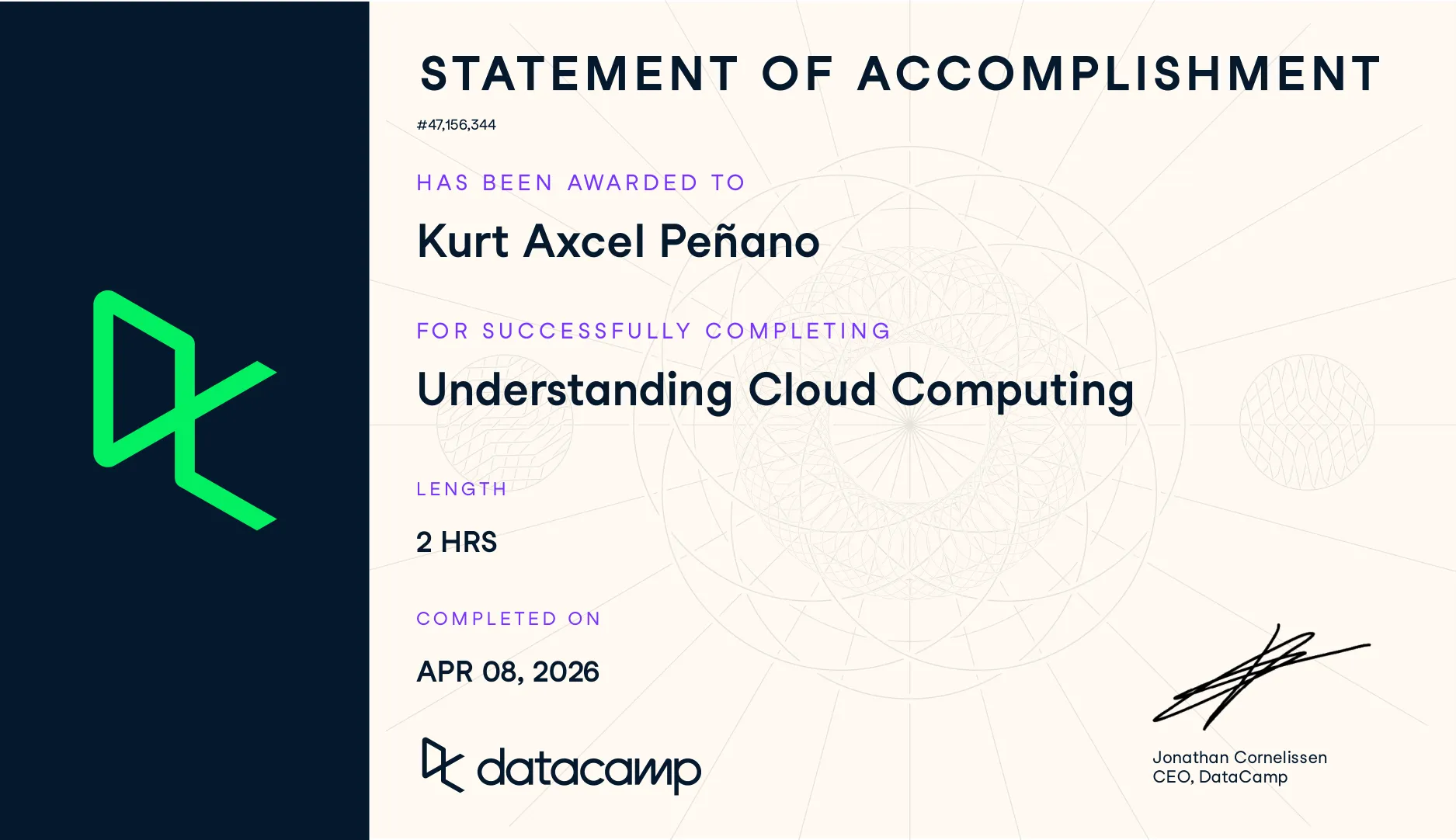
Introduction to Cloud Computing — Statement of Accomplishment
Congrats for Completing Understanding Microsoft Azure
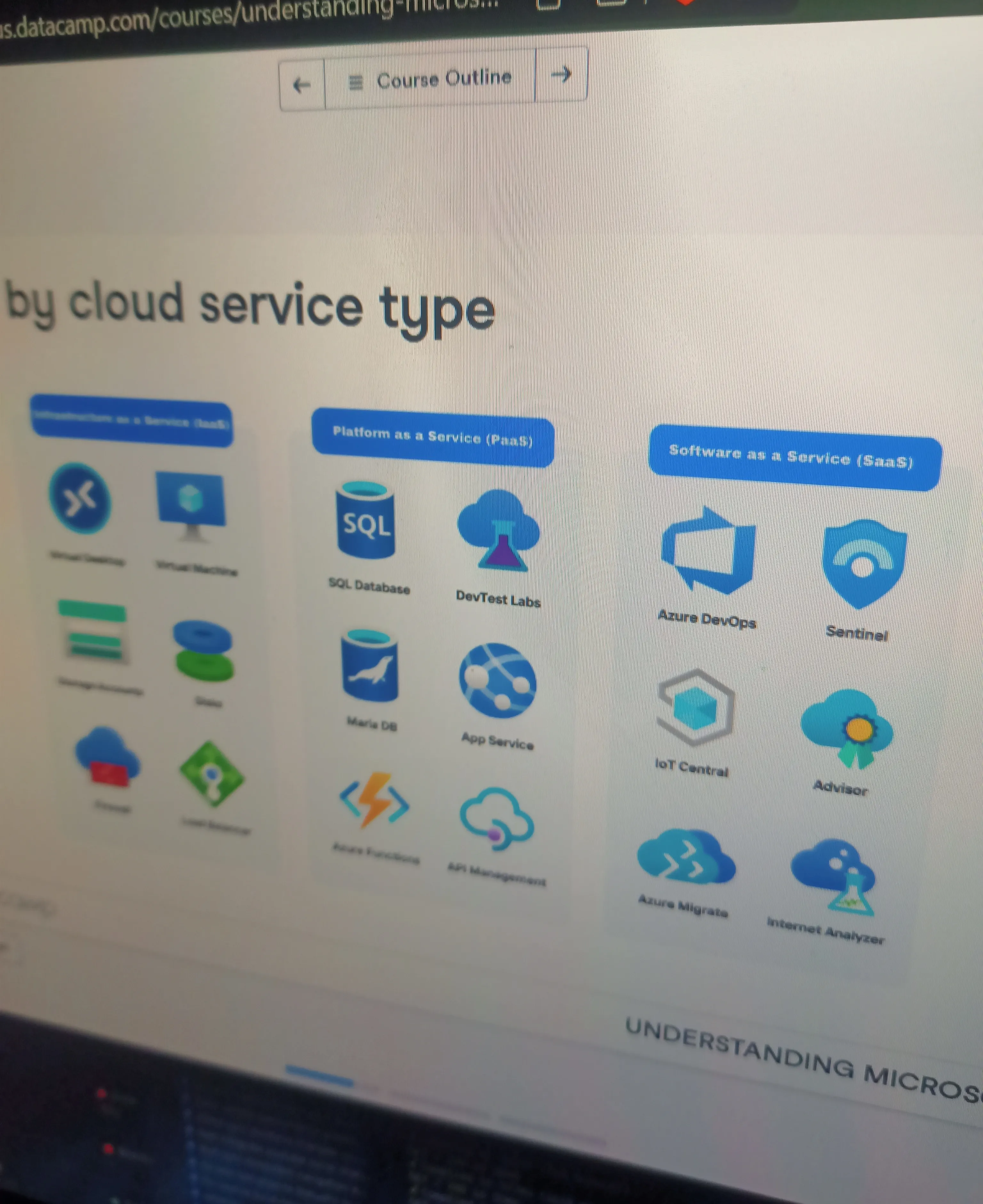
Introduction to Cloud Computing — Progress
Course 2: Understanding Microsoft Azure Architecture and Services
What it's about: Learn about the power of Microsoft Azure and cloud computing, exploring Azure's architectural components including computing, networking, storage services, and identity management.
Key takeaways:
- Azure's global infrastructure (regions, availability zones, resource groups) is designed for resilience and compliance.
- Core services like Azure Virtual Machines, App Services, and Azure Functions cover the full spectrum from IaaS to serverless.
- Azure's networking model (VNets, subnets, NSGs) provides fine-grained control over traffic flow and security.
Benefit to you:
This course transitions you from "knowing what the cloud is" to understanding how Azure specifically organizes its services. Essential knowledge for anyone planning to architect solutions on the Microsoft platform.
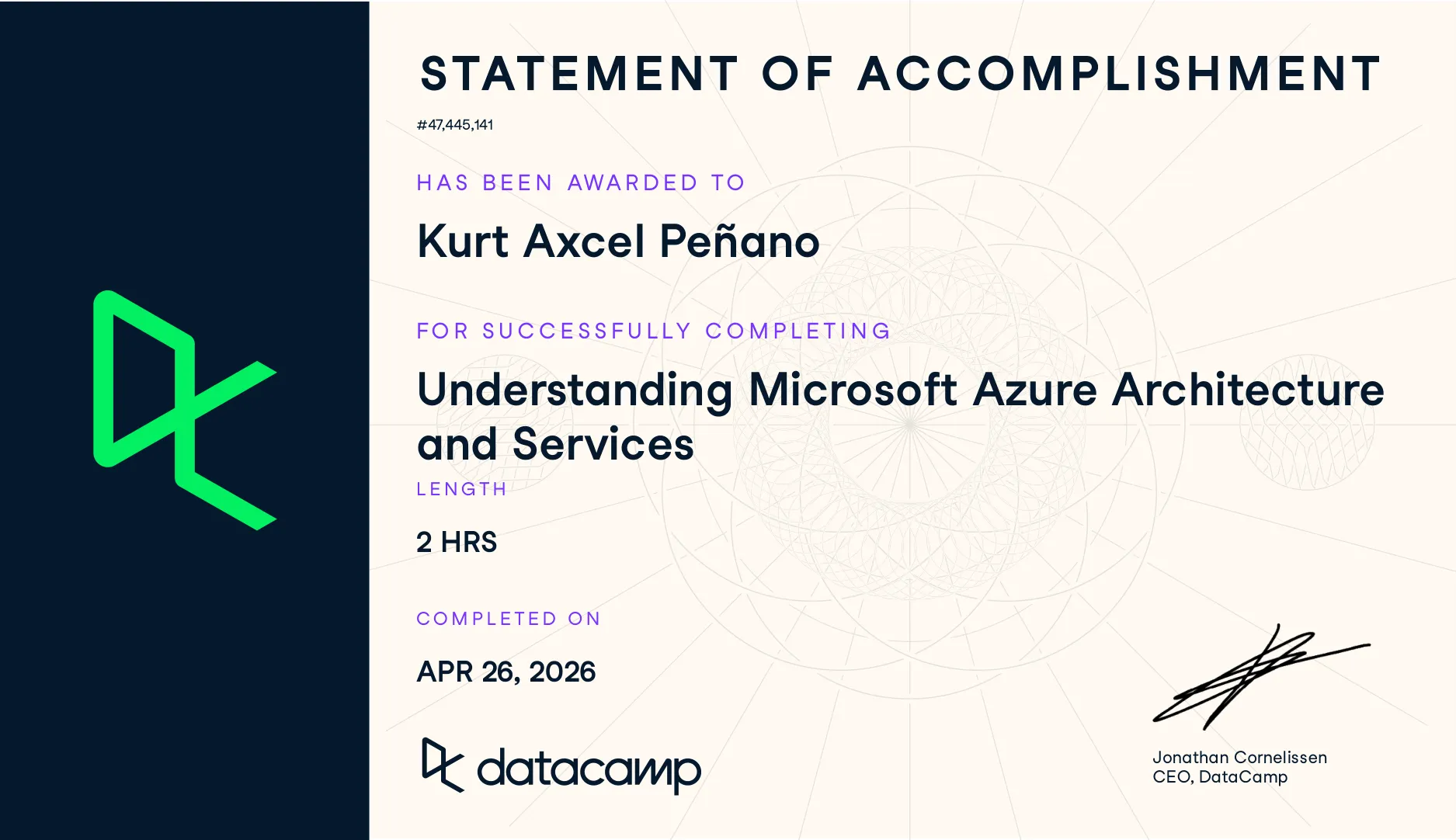
Understanding Microsoft Azure Architecture and Services — Statement of Accomplishment
Azure Architecture and Services — Progress
Course 3: Understanding Azure Compute and Data Management
What it's about: A deep dive into Azure's compute and data management capabilities. This course covers virtual machines, container orchestration, serverless computing, and Azure's suite of database and storage solutions.
Key takeaways:
- Azure offers multiple compute tiers (VMs, Containers, Functions) — choosing the right one depends on workload characteristics.
- Data management in Azure spans relational (Azure SQL), NoSQL (Cosmos DB), and unstructured storage (Blob Storage).
- ETL pipelines using Azure Data Factory enable batch processing and data integration at scale.
Benefit to you:
This is where theory meets practice. Understanding the compute and data layer is critical for anyone building applications that need to store, process, and serve data reliably.
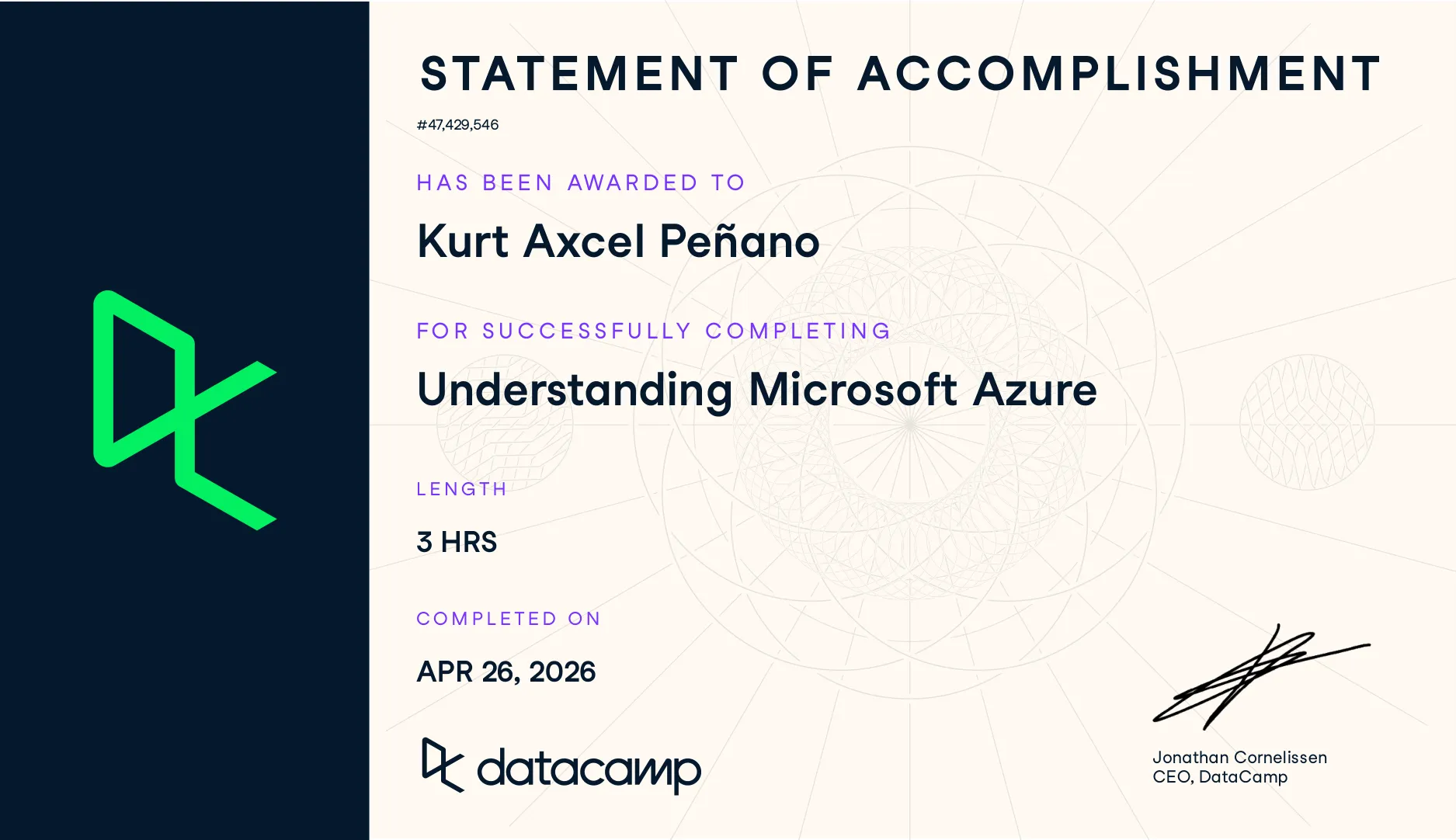
Understanding Azure Compute and Data Management — Statement of Accomplishment
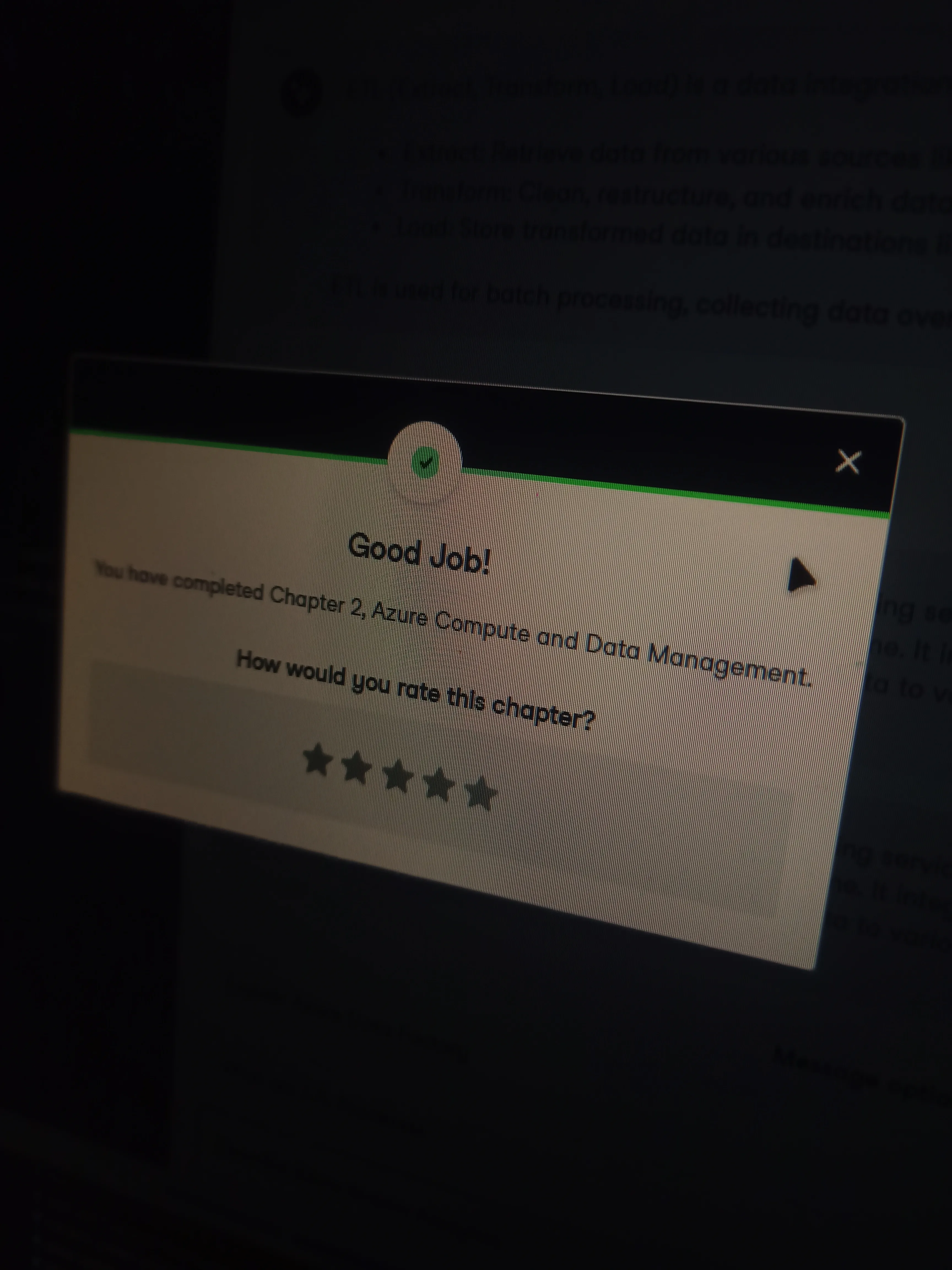
Azure Compute and Data Management — Progress
Course 4: Understanding Microsoft Azure Management and Governance
What it's about: The final course focuses on Azure's management and governance capabilities, including cost management, compliance frameworks, resource organization, and security tooling.
Key takeaways:
- Azure Policy and Blueprints enforce organizational standards and compliance at scale.
- Cost management tools (Azure Cost Management, pricing calculators) are essential for preventing cloud bill surprises.
- Role-Based Access Control (RBAC) and Azure Active Directory form the backbone of identity and access management.
Benefit to you:
Governance is what separates a well-run cloud environment from chaos. This course equips you to manage Azure resources responsibly — controlling costs, enforcing policies, and maintaining security posture across an entire organization.

Understanding Microsoft Azure Management and Governance — Statement of Accomplishment
Completing all 4 courses and the skill assessment isn't just about finishing tutorials — it's about closing the loop on the Cloud Trifecta.

Microsoft Azure Fundamentals (AZ-900) — Track Statement of Accomplishment
My Overall Take
What makes this track worth it:
- The AZ-900 track is genuinely beginner-friendly while still covering enough depth to understand Azure's architecture, services, and governance model.
- Microsoft's collaboration with DataCamp ensures the content aligns with the actual certification exam topics.
- Completing this alongside the AWS Cloud Practitioner and Google Cloud Study Jam gives a panoramic understanding of how the three major providers differ in philosophy and tooling.
What it doesn't replace:
- Hands-on lab experience. The track is theory-heavy and non-coding. To truly master Azure, you need to spin up resources, break things, and troubleshoot in a real environment.
Who should take this:
Anyone preparing for the AZ-900 certification exam, or anyone who wants a structured, vendor-neutral-to-Azure introduction before committing to deeper specialization.
NEXUS REGISTRY: AZURE FUNDAMENTALS
Azure Fundamentals is the final piece of the foundational cloud trifecta, establishing a comprehensive understanding of Microsoft's cloud ecosystem, governance, and architectural patterns.
Core Outcomes:
- Architecture Mastery — understanding Azure regions, availability zones, and resource management.
- Service Specialization — proficiency in compute (VMs, Apps, Functions) and data (SQL, NoSQL) tiers.
- Governance & Compliance — implementing RBAC, policies, and cost management at scale.
Primary Identity: Multi-Cloud Infrastructure / Cloud Architecture
Keep building, keep learning. See you on the cloud.
#Azure #MicrosoftAzure #AZ900 #CloudComputing #DataCamp #CloudTrifecta #AWS #GCP #ContinuousLearning #BuildInPublic #TechStudent #CloudwithKurtAxcel